21 Plum Hair Color 2027
I started noticing plum hair in the chair next to mine. Not the dark, almost-black plum that reads as brown in low light, but the kind with a violet kick that catches the salon ring light. It’s not a color you see every day, and that’s exactly why I kept leaning closer.
This roundup has 21 takes on Plum Hair Color, from sheer pastel glosses to full-on eggplant saturation. Some work on fine hair, some need thick texture to hold the depth. A few you can do with a box at home; most are a three-hour chair commitment.
I’ve spent years chasing colors that fade to brass by week four. Plum is different. It ages into a cooler, smokier version of itself, and that alone makes me want to try it.
Vibrant Plum Waves With Full Bangs

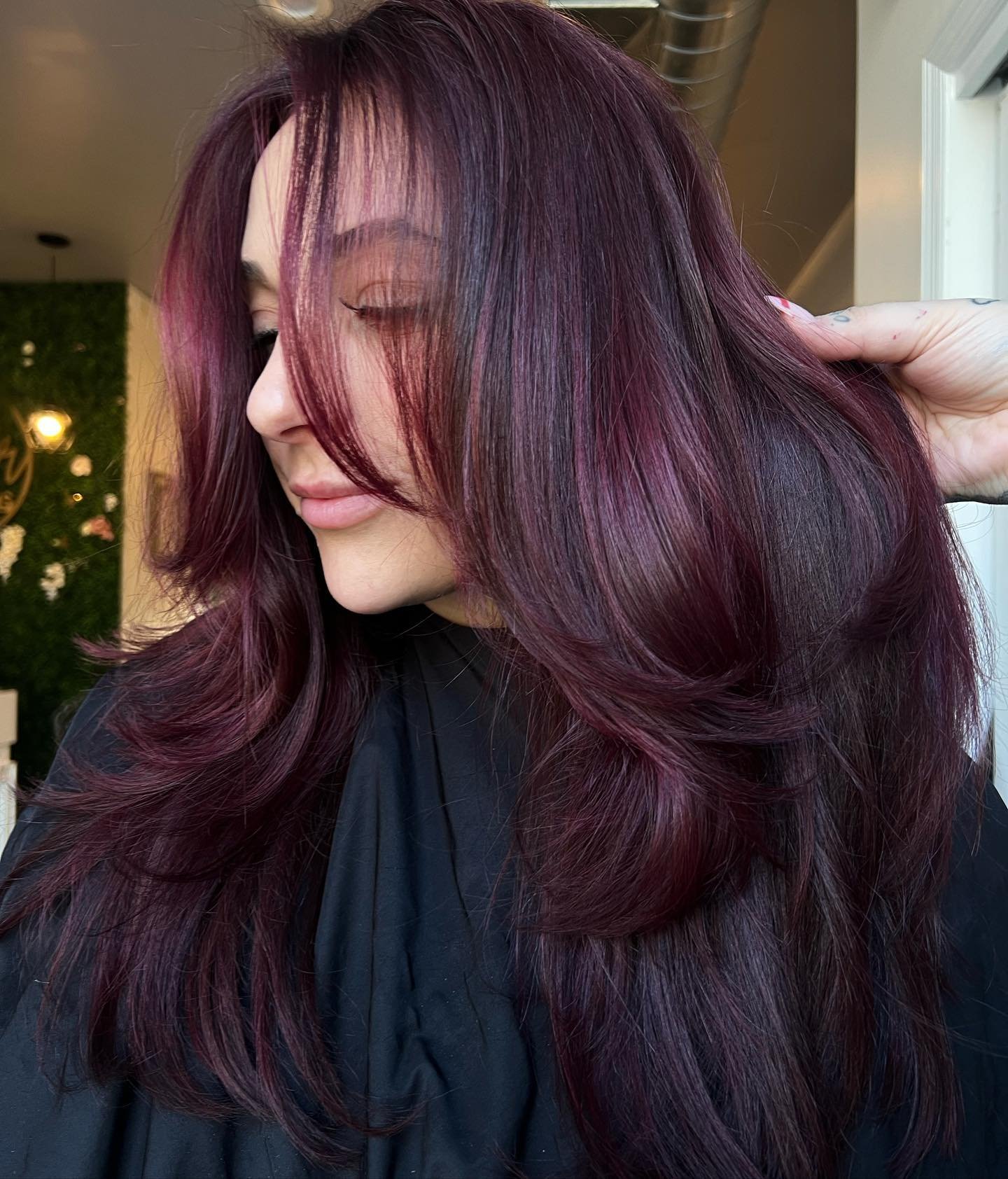
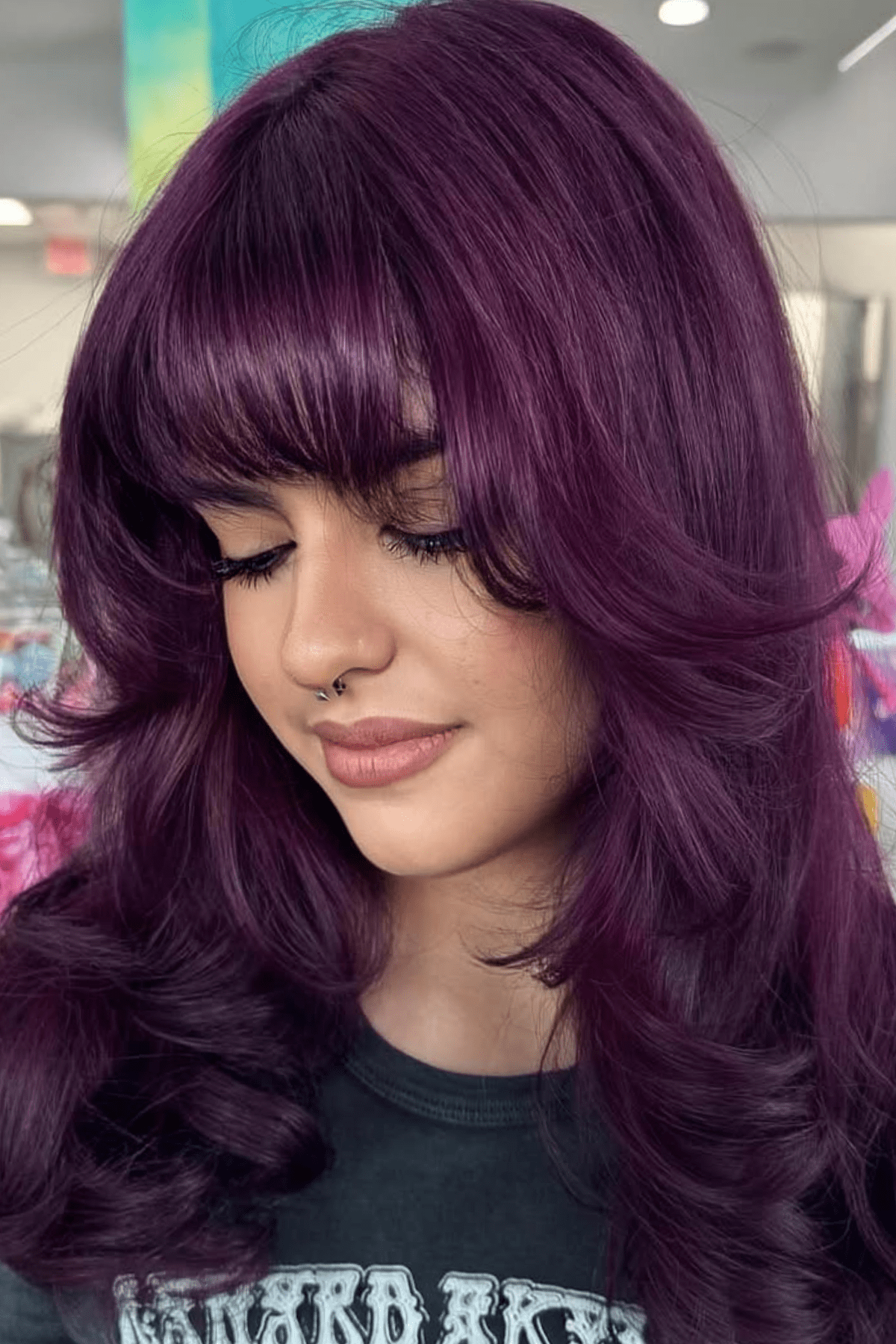
That vibrant plum hair is not for the cautious, but it pays off on shoulder-length waves with full bangs. The all-over color is deep enough to hold its own against the fringe, and the wavy medium-density texture gives the bangs enough body to stay put. A side part breaks up the intensity. The layers below prevent the waves from clumping into one solid shape. This works best if you are ready for a confident shade that still reads as dark and grown-up.
Berry Plum With Violet Tones

How do you get violet tones that are visible but not streaky? It starts with a berry plum hair base, shaded between magenta and wine. Then the dimensional violet tones are painted onto select strands with a fine-tooth technique, concentrating on the longer layers so the color builds gradually. The curtain bangs pick up the violet only at the tips, keeping the root area grounded.
For fine straight hair at mid-back length, the trick is to keep the violet tones concentrated at the mid-lengths and ends. A layered blowout separates the pieces so you see both the warm berry base and the cooler violet highlights. The middle part lets the color fall evenly on both sides. This is not a single-process job; it requires the stylist to map out where the light hits.
Deep Plum Base With Wine Highlights

Deep plum hair with wine highlights beats a flat dark purple every time. The near-black base keeps it serious, while the highlights catch light and add dimension without screaming red. On shoulder-length, wavy medium-thick hair with full bangs, these subtle streaks prevent the whole look from being a solid dark mass. Upkeep: the deep base grows out gracefully for about eight weeks, but the wine highlights will need a gloss or toner every four to six to keep from dulling to a warm brown.
Dark Base With Plum Highlights

Plum highlights on dark hair rely on placement, not volume. The stylist takes a dark base, usually a level 3 or 4, and paints on vibrant plum highlights in thin, spaced sections. That keeps the overall effect subtle, not streaky. Because the highlights are fine and the base is deep, the contrast reads as dimension, not costuming. The tone of the plum is kept cool, with violet notes, so it stays distinct from the base. The highlights are concentrated around the face and through the mid-lengths, leaving the roots dark.
The technique demands a steady hand and a foil for every section. Highlights on a dark base need a pre-lightener first, then a plum toner. The mid-back length and straight texture show off the lines. A side part helps the highlights fall where they catch light. The stylist must lift each section to the exact level before toning, or the plum reads muddy. Each foil placement determines how the final colour reads, and with a dark base there is no room for error.
Shoulder-Length Plum With Violet Undertones

Does your skin run cool or neutral? Then plum with violet undertones is your shade. The subtle violet notes cancel any warmth that makes a rich plum read muddy, so the colour stays fresh against cool-toned complexions. Shoulder-length layers give the waves room to catch light, and the medium density carries the colour without looking flat. The middle part works well for oval and heart-shaped faces, drawing attention to the cheekbones. This shade fades gently, becoming a softer violet over time, which means the grow-out is not jarring. A toning session every four to six weeks keeps the undertones alive, but the wavy texture diffuses the colour naturally, so you can stretch that appointment by a week.
Collarbone Dark Plum With Red Undertones

The first chill of autumn and this colour makes sense. Dark plum red with subtle red undertones lands in that sweet spot between a wine stain and a blackberry, warm enough for sweater weather, deep enough for holiday parties. The collarbone length hits the scarf line, and the side-swept bangs frame the face without hiding a new pair of earrings. Loose waves let the red undertones catch the light at the ends. This is a dinner-party colour, a firelight colour, a holiday-punch colour.
Bright Magenta-Toned Plum Bob

That bob is not playing safe. The magenta plum hair is bright, almost neon, with lighter pinkish-purple highlights woven through the wavy bob. The wispy curtain bangs soften the intensity, and the textured waves stop it from looking flat. What to ask your stylist: keep the bob blunt at the chin, add a root shadow in a deeper violet, and place the pinkish highlights around the face only. The side part opens the face, and the fine to medium density handles the brightness without feeling heavy.
Mid-Back Rich Plum With Deep Red Undertones

That voluminous wave stack catches the light and suddenly you see it: the deep red undertones pulling the whole thing warmer, a counterweight to a shade that could read flat at this length. On thick, wavy hair the colour settles into every ridge and hollow, so the vibe shifts with each turn of the head. The honest reality? This fade shows up around week four. The cool plum softens first and what pushes forward is redder, toastier, less jewel-box and more clove. Not bad if you like evolution, maddening if you wanted it locked in place. My test: a trim every eight weeks keeps the ends fresh enough to hold both colour and wave shape, but the tone shift is inevitable.
Deep Plum With Curtain Bangs

Who actually gets curtain bangs with deep plum colour? Oval and heart-shaped faces, because the soft split hits the cheekbone peak and lets the narrow chin frame itself. Not round or square — the side-swept shape on a shorter shoulder length adds width where you probably want length. The wavy, thick texture holds the bend through midday, which is more than my fine hair ever managed. That deep plum base stays dimensional because the bangs catch the light at a different angle than the rest, a built-in contrast without highlights. If your hair is thin, skip the full fringe and go for face-framing pieces only; they give the same lift with less daily work.
Dark Brown With Deep Plum Highlights

This is the colour equivalent of having a conversation at a reasonable volume instead of shouting. A dark brown base holds the roots in check, the deep plum highlights add colour without full commitment. The technique is strategic: your stylist paints the plum sections underneath the top layer and through the mid-lengths, so the dark brown stays dominant from a distance and the plum appears when you move. On wavy, thick hair at mid-back length, the highlights catch every wave crest and the dark base fills the hollows. After about a month, the plum will look more like a warm berry than violet — but that still sits well against the brown. Easy grow-out if you keep the highlights off the scalp.
Tell your stylist you want wide panels, not thin weaves. The goal is dimension, not stripe. A money piece around the face can connect the highlight to your skin tone.
Mid-Back Intense Plum With Violet Undertones

I thought the intense plum violet would last forever. Eight weeks in and the mistake is clear: the violet fades first. What stays is a warmer, browner base that never quite matches the original. On wavy, medium-density hair at mid-back, the colour sits rich for two weeks, then you notice the ends drinking shampoo differently and the mid-lengths turning coppery. The fix is obvious once you know: ask for a violet-toned gloss at the appointment, not just colour. The gloss buys you two more weeks of cool tone before the fade begins. And a side part helps — the deeper colour sits in the longer section, so the warmer side hides underneath.
Collarbone Deep Plum With Burgundy Undertones

Collarbone, wavy, thick, loose waves, no bangs, and a middle part. The deep plum burgundy reads warm in the light and cool in the shade, a trick of the subtle burgundy undertones that shift with the room. The cut is blunt enough to hold shape through the wave pattern, soft enough not to box the jaw. That middle part works best on symmetrical features because the colour drops evenly on both sides, same depth at every tip. Texture is the quiet win here: thick waves trap the undertone in the bends, so you get burgundy in the hollows and plum on the crests, no highlighting required. The entire package is low-effort once the colour is done.
Deep Plum With Burgundy Hues

It looks black from across the room. Then you step into decent light and the deep plum burgundy hues surface, a rich wine note that shifts as you move. Collarbone length, wavy, medium density, no bangs. The subtle burgundy undertones keep the colour from going flat, which is the risk with any dark base. By day three, the waves drop a little, but the depth holds. By week four, the burgundy starts warming up, and that is when you decide if you want to tone it back or let it ride into auburn territory. I let it ride. The warm phase lasts longer than the cool one, and it still looks expensive.
Ombré Plum Color Transition

Best grow-out in this roundup. The ombre plum hair starts with a dark plum base at the roots and transitions into lighter plum tones through the mid-lengths and ends. Long, wavy, medium density, no bangs. The technique is the whole point. The stylist lifts the mid-shaft and ends to a lighter brown, then layers plum over it in sections so the shift reads gradual, not striped. No harsh line, no obvious demarcation. The lighter ends will fade faster than the dark base, and that is the trade-off. They need a toning shampoo every two weeks to stay cool. But the roots grow in soft, and you can go ten weeks between appointments without anyone knowing.
A gradual plum color transition like this one works because the dark base does the heavy lifting. The roots never scream for attention. The ends do the talking.
Mid-Back Dark Base With Plum & Burgundy Highlights

I will admit I was skeptical about layering plum and burgundy on a dark base. It can read muddy if the tones fight. This one works because the plum burgundy highlights are placed on the mid-lengths and ends, not the roots, so the dark base stays clean and the colour lands where light hits. Mid-back length, wavy, thick, no bangs. The deep plum and burgundy strands add dimension without looking like you tried too hard. The honest downside: thick hair eats highlights. You need enough of them to see the colour move, which means a full foil session, not a quick partial. That is three hours in the chair and a touch-up every ten weeks. Skip this if your hair is fine and you want low upkeep. The contrast will be subtle, and subtle on fine hair can read as nothing at all.
Mid-Back Vibrant Deep Plum Waves

The color is the first thing you notice, and it stays that way all day. These vibrant deep plum waves read as one solid, saturated statement from root to mid-back, and the loose waves keep the depth from going flat. I have medium-thick hair that loses curl by midafternoon, and this is the rare style where the waves hold their shape because the layers give them somewhere to go. The tone is cool and rich, that deep plum that looks almost black in low light and glows purple under fluorescents. On fine hair, skip the heavy cream; the weight will kill the wave before lunch. On my texture, it takes a good fifteen minutes with a wand, but the payoff is a color that looks deliberate, not accidental.
The grow-out is the real story. That deep plum base fades from the ends first, so you get a nice gradient for about six weeks before it starts looking washed. I lost a fair amount of color by week four, and I knew I was in for a toning appointment soon.
Dark Brown With Plum Balayage

The genius of plum balayage dark hair is that it never screams for attention, it just catches the light differently every time you move. The technique involves hand-painting vibrant plum highlights onto a dark brown base, starting low near the mid-lengths and thickening toward the ends, so the color graduates instead of starting at one hard line. On this mid-back length with thick, wavy texture, the plum reads as a wearable shimmer rather than a costume, which is exactly why I would argue this is the most DIY-approachable plum option out there. You could theoretically try it at home with a brush and a mirror, but the risk of patchy saturation is high, and a salon will feather the dark brown through the ends so the transition looks like light, not a mistake. The tone stays subtle for the first few weeks, then the plum brightens as it oxidizes, which is a pleasant surprise if you like a color that evolves.
Multi-Tonal Plum With High Shine

Are you the person who wants a plum that changes its mind depending on the angle? This multi-tonal plum hair is for you, with rich plum carrying subtle red and violet undertones that surface in different lights, and the high shine pulls the whole thing together like glass. It flatters medium to thick density the most because the tone needs enough hair to catch those shifts; on fine, straight strands the red and violet just blur into one flat berry. The length here is mid-back with long layers, and the voluminous waves take a good twenty minutes, but that shine is non-negotiable. Without a glossing serum, the multi-tonal effect looks dusty, not dimensional. The honest downside is that this shade fades faster than a single-tone plum because each undertone lifts at its own rate, so by week five the violet may vanish while the red lingers, and you will be back in the chair.
Deep Plum With Visible Red Highlights Deep Plum With Red Streaks

This is the boldest of the lot, and the verdict is that deep plum red streaks work best when they are placed like a secret, not a shout. The deep plum base is dark enough to ground the look, and the visible red highlights are painted in thick, deliberate ribbons through the mid-lengths of this wavy, medium-density hair, so they flash every time the waves turn. The tone is warm and almost cherry, which jumps out against the cool plum base, and that contrast is the whole point. On collarbone length, those red streaks would crowd; here at mid-back, they have room to breathe. Just know the red will fade ahead of the plum, leaving you with a patchy pink by week three if you skip the color-depositing conditioner.
Dark Plum With Multi-Dimensional Tones

I confess I tried to do dark plum multi-dimensional at home once, and I ended up with a single flat berry shade that looked nothing like the subtle red and violet highlights I had admired in a photo. The mistake is assuming you can achieve these tones with one box of dye, but the reality is that this look requires layering two or three separate tones so the plum reads as dimensional rather than solid. At the salon, the stylist will weave in fine ribbons of red and violet around the collarbone-length layers, letting the dark plum base stay dominant so the highlights glow through without turning circus-y. This is a salon job, period, because the foil placement controls how the tones interact, and doing it yourself risks a muddy brown-red mess. The result on wavy, medium-density hair is a softer grow-out because the highlights are subtle enough to blend with new growth at the roots.
Half-Up Style With Deep Plum

I resisted a bob for two years, but this chin-length cut with its deep plum base and magenta tones is the reason I finally caved, the half-up twist at the back keeps it off my neck and makes the subtle burgundy highlights catch the light instead of vanishing into the dark. It’s a summer-to-early-fall color, bright enough for a wedding but not so loud that I felt stared at on the train home.
,
- ,
- Length: chin-grazing, blunt ends
- Technique: root shadow, half-up twist
- Texture: straight, fine to medium density
- Styling: five minutes with a flat iron, no product needed
- Ask your stylist: keep one blunt baseline
,
,
,
,
,
,
My fine hair usually goes flat by 4 pm, but this bob held its shape till midnight, the half-up style gives it volume where it needs it. The grow-out is the real win, the root shadow hides the line for about six weeks, so I booked it twice in one season and never felt the urge to chop it off. Skip it if your hair is coarse and thick, the blunt cut will just puff out on you.
Final Thoughts
I started this roundup curious about a single shade. I’m finishing it convinced that plum is the most forgiving vivid color I’ve seen.
What surprised me is how many of these rely on the same principle: a dark base with a bright reveal. It’s not a one-note color, it’s a trick of the light.
- Wash with cool water to slow fading.
- Use a purple shampoo once a week.
- Tone at week five, not week ten.
I’m booking the dark brown with plum balayage next. Low risk, high payoff, and I already know how it will grow.